Culture Change Considerations
Key points every leader should consider when they think about changing the culture in their organization.
Michael Brown
12/8/20252 min read
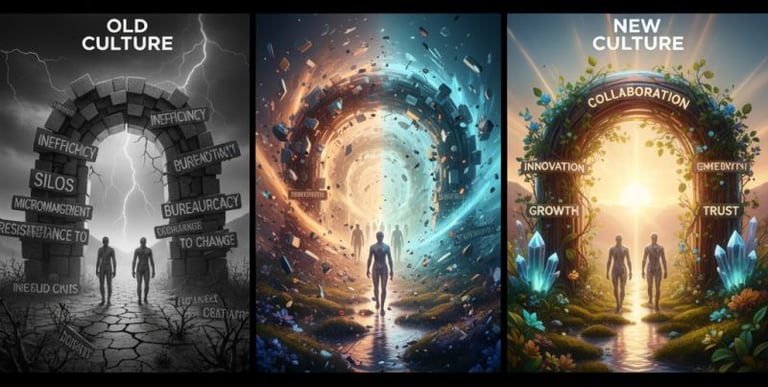
Your organization’s culture is demonstrated each day in how well you’re achieving your objectives, how well people are getting along, and how well the organization is recognized in the way you want to be by others.
While an organization’s mission, vision, values can be communicated and displayed on the wall or an employee handbook, a culture is modeled and becomes the climate of the workforce. Culture is really something that is practiced and reflected back on as a demonstration of how and why the organization exists. Another way of thinking about an organization’s culture is to think about the identity the organization establishes for itself, the identity it fosters throughout the workforce, and the identity the organization personifies to the outside world.
The water-cooler banter, surveys, polls, and social media posts may provide some insight into what the workforce and the world feels about the organization. The most common themes will likely be lead indicators of the existing organizational culture. If the results represent the desired image then you know you're on the right track.
The culture can honestly be anything the organization wants it to be - but to be effective it needs to be implemented as intended; it needs to be an integral part of what gets things done; it needs to be part of how the organization is perceived by it’s workforce and others. And of course the top leadership will absolutely set the tone of the entire organization's culture.
If you think you might need to adjust your organization’s culture, consider a few of the common pitfalls that will derail your efforts to change or develop an organizational culture:
Promoting, Celebrating, Forecasting the new culture before it’s understood and aligned with members of the organization.
The leaders head out on a retreat and return with a new box-o-culture to implement.
The leaders telling the employees what the new culture is for the employees to follow (but maybe it doesn't really apply to the leadership).
Importing / Duplicating a culture from another organization.
Sending out a memo or passing out a book for people to read with expectations that becomes the new culture.
Culture Change Starts At The Top. Senior Leaders Are Responsible To Model The Desired Behaviors And Outcomes. The most effective cultures are intentional and habitual. The organization overall needs to be intentional about how the new culture unfolds and lives going forward.
The systems and processes have to be in place to support and allow for the culture to thrive so there can’t be contradiction in theory and practice or competing interests. The espoused values must be aligned with both the workforce personnel and the business objectives.
Culture is the norms and behaviors that are encouraged and accepted as well as those that are rejected and discouraged. The way things get done – how WE operate.
Adjusting a culture and gaining commitment can take some time. Patience, repetition, and support are key to the successful shift. Being a positive role model, explaining the desired culture, and including the workforce in implementation can help strengthen the commitment to the organization's culture and reputation. And it never hurts to recognize those who exemplify the intended culture.
Supporting Professionals In Their Efforts To
Build Capacity
Resolve Complex Issues
Succeed in a New Role
© 2024 and Beyond.
All content herein is intellectual property of Ironstone Coach. All rights reserved.
Stock photo/imagery provided by unsplash.com & pexels.com
Veteran Owned Business
State of California
Disabled Veteran Business Enterprise (DVBE)
Certification ID 2040298